
Follow us Now on Telegram ! Get daily 10 - 12 Interesting Updates. Join our Telegram Channel https://t.me/OhWomen
Download Telegram App before Joining the Channel
In today’s fast-paced lifestyle, stress, anxiety, and mental fatigue have become common health concerns. One of the simplest yet most powerful tools to improve both mental and physical well-being is deep breathing. This natural practice requires no equipment, no cost, and just a few minutes a day, yet its benefits are profound.
What Is Deep Breathing?
Deep breathing, also known as diaphragmatic or belly breathing, is a technique where you inhale deeply through the nose, allowing the lungs to fill completely and the abdomen to expand. Unlike shallow chest breathing, deep breathing delivers more oxygen to the body and activates the body’s relaxation response.
How Deep Breathing Affects the Body
When you practice deep breathing, your nervous system shifts from a stress-driven “fight or flight” mode to a calm “rest and digest” state. This helps slow the heart rate, reduce blood pressure, and relax tense muscles. Increased oxygen supply improves circulation and supports better organ function.
Health Benefits of Deep Breathing
Regular deep breathing practice offers multiple health benefits. It helps reduce stress and anxiety, improves focus and mental clarity, and supports emotional balance. Deep breathing also enhances lung capacity, boosts immunity, aids digestion, and improves sleep quality. Over time, it can help manage conditions like high blood pressure, fatigue, and tension headaches.
Deep Breathing for Mental Wellness
Mental health is closely connected to breathing patterns. Slow, mindful breathing calms the mind and reduces racing thoughts. It promotes mindfulness, helping individuals stay present and emotionally grounded. Even a few minutes of deep breathing during stressful moments can restore calm and improve decision-making.
How to Practice Deep Breathing Correctly
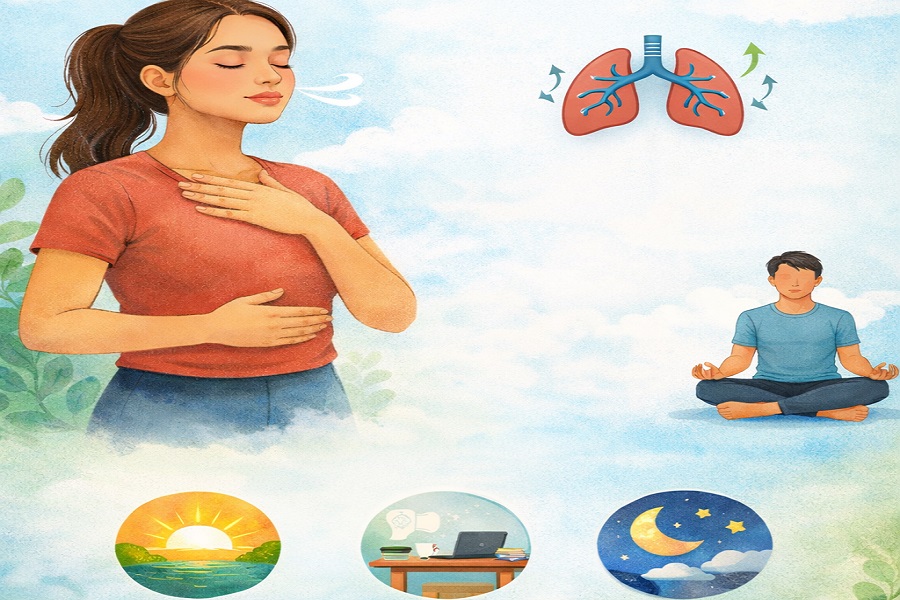
To begin, sit or lie down comfortably with your spine straight. Place one hand on your chest and the other on your abdomen. Inhale slowly through your nose, allowing your belly to rise while keeping your chest relatively still. Hold your breath for a few seconds, then exhale gently through your mouth. Repeat this process for 5 to 10 minutes daily.
Best Time to Practice Deep Breathing
Deep breathing can be practiced anytime, but early morning and bedtime are especially beneficial. Morning breathing energizes the body and prepares the mind for the day, while nighttime practice helps release stress and promotes deep sleep. It can also be done during work breaks or before important tasks.
Deep Breathing as a Daily Habit
Consistency is key to experiencing the full benefits of deep breathing. Incorporating it into your daily routine—along with yoga, meditation, or light exercise—can significantly enhance overall health. Over time, this simple habit can create long-lasting positive changes in both body and mind.
Final Thoughts
Deep breathing is a powerful reminder that good health doesn’t always require complex solutions. By slowing down and breathing deeply, you allow your body and mind to reset naturally. Just a few mindful breaths each day can lead to better health, improved emotional balance, and a calmer, more focused life.
Source : Oh Women