
Follow us Now on Telegram ! Get daily 10 - 12 Interesting Updates. Join our Telegram Channel https://t.me/OhWomen
Download Telegram App before Joining the Channel
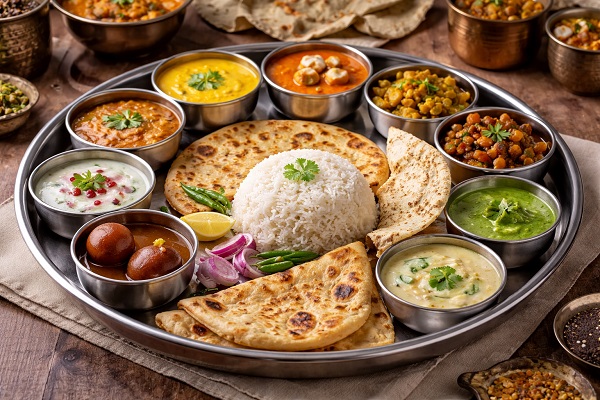
The Indian thali is more than just a meal — it is a reflection of India’s rich history, regional diversity, and cultural philosophy. Served on a single platter with multiple small portions, the thali represents balance, hospitality, and tradition. Over centuries, it has evolved from a simple, community-based meal to a curated gastronomic experience in modern restaurants.
Ancient Roots: The Philosophy of Balance
The concept of the thali dates back to ancient Indian traditions rooted in Ayurveda. Meals were designed to include six tastes — sweet, sour, salty, bitter, pungent, and astringent — ensuring nutritional balance and digestive harmony. Food was served on banana leaves or metal plates, emphasizing sustainability and simplicity.
In early households and temples, meals were wholesome and seasonal. The idea was not excess, but completeness — combining grains, lentils, vegetables, dairy, and pickles in a harmonious spread.
Royal Influence: The Grand Expansion
During medieval times, royal kitchens expanded the concept of the thali. Mughal and Rajput influences introduced richer gravies, aromatic spices, and elaborate sweets. Silverware and decorative serving styles elevated the thali into a symbol of luxury and prestige.
Regional identities also became more pronounced:
Rajasthani thali featured dal baati churma and gatte ki sabzi.
Gujarati thali balanced sweet and savory flavors.
South Indian thali offered sambar, rasam, poriyal, and curd rice on banana leaves.
Punjabi thali highlighted buttery curries and breads.
Each region adapted the thali to local climate, agriculture, and culture.
Colonial & Post-Independence Era: Standardization and Accessibility
With urbanization and railway travel during the colonial period, the thali became a convenient way to serve complete meals to travelers. Post-independence, thali restaurants flourished across cities, offering affordable, unlimited meals — reinforcing the Indian value of “Atithi Devo Bhava” (The guest is God).
The stainless-steel compartment plate became common, making service efficient while maintaining tradition.
Modern-Day Thali: Fusion & Reinvention
Today, the thali has evolved into a gourmet experience. Fine-dining restaurants curate themed thalis, blending traditional recipes with modern plating techniques. Health-conscious versions now include millet-based rotis, organic vegetables, and vegan alternatives.
Global exposure has also led to fusion thalis — Indo-Chinese, Indo-Italian, and even dessert thalis designed for social media appeal.
Cultural Significance Today
Despite modernization, the essence of the thali remains unchanged — unity in diversity. Every bowl on the platter tells a story of region, season, and heritage. It symbolizes India’s culinary philosophy: balance, abundance, and inclusivity.
From temple offerings to luxury dining tables, the evolution of the Indian thali reflects the journey of Indian society itself — rooted in tradition yet constantly adapting to change.
Source :- Oh Women