

Follow us Now on Telegram ! Get daily 10 - 12 Interesting Updates. Join our Telegram Channel https://t.me/OhWomen
Download Telegram App before Joining the Channel
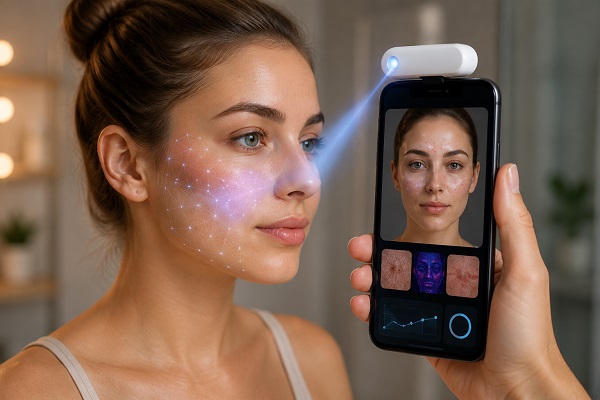
Skin scanner apps are becoming a major trend in the beauty and skincare industry. From analyzing acne to detecting wrinkles and pigmentation, these apps promise instant skin diagnosis using AI and smartphone cameras. But the real question is—What Are Skin Scanner Apps?
What Are Skin Scanner Apps?
Skin scanner apps are AI-powered mobile applications that analyze your skin using:
Smartphone camera images
AI algorithms & machine learning
Facial mapping technology
Skin condition databases
They claim to detect:
Acne severity
Pores size
Dark spots & pigmentation
Wrinkles & fine lines
Skin hydration levels
Popular use cases include virtual dermatology, skincare product recommendations, and beauty tracking.
How Skin Scanner Apps Work
Most apps follow a 3-step process:
You upload or scan your face using the app
AI detects skin patterns and compares them with datasets
The app generates a skin report with suggestions
Some advanced apps even use:
3D face mapping
AR overlays
Real-time scanning filters
How Accurate Are They Really?
Strengths:
Good at identifying surface-level issues like acne or redness
Useful for tracking skin changes over time
Helps beginners build skincare routines
Convenient and fast
Limitations:
Cannot replace dermatologists
Accuracy depends on lighting and camera quality
May misread skin tones or textures
Limited understanding of medical skin conditions
AI training data bias can affect results
Overall accuracy is estimated as:
60%–85% for basic skin analysis
Lower for medical-grade diagnosis
Factors That Affect Accuracy
Lighting conditions during scanning
Camera resolution of your phone
Skin tone diversity in AI training datasets
App algorithm quality
User distance from camera
Facial makeup or filters
Should You Trust Skin Scanner Apps?
Yes, for:
Basic skincare guidance
Routine tracking
Product suggestions
Educational purposes
No, for:
Medical diagnosis
Serious skin diseases
Prescription treatment decisions
Best practice: Use apps as a support tool, not a replacement for dermatologists.
Future of Skin Scanner Technology
By 2026 and beyond, we can expect:
AI dermatology assistants
Smart mirrors with skin tracking
Better ethnicity-inclusive datasets
Integration with wearable devices
Real-time skin health monitoring
Conclusion
Skin scanner apps are improving rapidly, but they are still in a supportive, not diagnostic stage. They are great for skincare awareness, but not fully reliable for medical accuracy. The future looks promising as AI continues to evolve in beauty tech.
Source : - Oh Women
Source : - Oh Women