

Follow us Now on Telegram ! Get daily 10 - 12 Interesting Updates. Join our Telegram Channel https://t.me/OhWomen
Download Telegram App before Joining the Channel
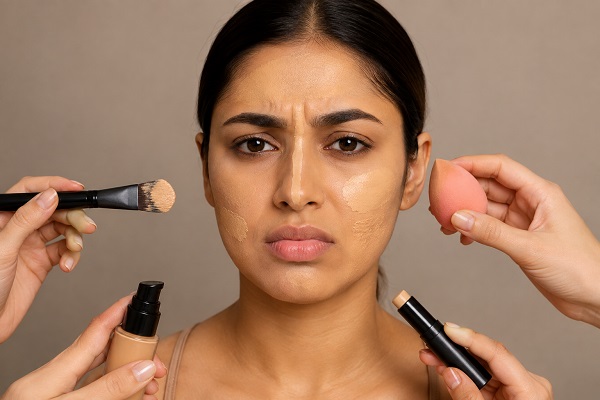
Foundation is one of the most important steps in a makeup routine. It can create a smooth, even-looking complexion and help the rest of your makeup blend beautifully. However, even a good foundation can look cakey, patchy, or unnatural if it is applied incorrectly.
Avoiding a few common foundation mistakes can make a big difference. Here are the most common mistakes to watch out for and simple ways to achieve a more natural-looking finish.
Choosing the Wrong Foundation Shade
One of the biggest mistakes is selecting a foundation shade that is too light, too dark, or has the wrong undertone. Always try to match the foundation as closely as possible to your natural skin tone.
For a better match, consider your undertone—warm, cool, or neutral—rather than choosing a shade based only on how it looks in the bottle.
Skipping Skin Preparation
Applying foundation directly onto dry or unprepared skin can make it look uneven and emphasize dry patches. Before makeup, gently cleanse your face and apply a suitable moisturizer.
During the daytime, sunscreen should also be part of your skincare routine.
Applying Too Much Foundation
More foundation does not necessarily mean better coverage. Applying a thick layer can make your makeup appear heavy and cakey.
Start with a small amount and build coverage gradually only where you need it.
Using the Wrong Application Tool
Brushes, makeup sponges, and fingers can all provide different finishes. Using a dirty or unsuitable tool can make foundation look patchy.
A damp makeup sponge can provide a softer, more natural finish, while a foundation brush can offer more coverage.
Not Blending Properly
Unblended foundation can leave visible lines around the jaw, hairline, and nose. Take enough time to blend the product evenly across your face.
Pay particular attention to the jawline so that your face and neck appear naturally connected.
Ignoring the Neck
A foundation that matches your face but contrasts noticeably with your neck can make the makeup look unnatural. Blend a small amount of foundation toward the jawline and neck when necessary.
Applying Foundation on Very Dry Skin
If your skin is dry, foundation can settle into flaky areas and make them more noticeable. Proper moisturization and choosing a hydrating formula can help create a smoother-looking finish.
Using a Formula That Does Not Suit Your Skin Type
Different foundations are designed for different skin needs. Oily skin may work better with lightweight or oil-controlling formulas, while dry skin may prefer more hydrating textures.
Combination skin may benefit from using products strategically on different areas of the face.
Applying Powder Everywhere
Setting the entire face with a large amount of powder can remove the natural-looking finish of foundation. Instead, concentrate powder mainly on areas that become oily or where makeup tends to move.
Forgetting to Blend Around the Nose
The area around the nose can easily become cakey because of natural oil and facial movement. Use a small amount of foundation and blend carefully around the sides of the nose.
Applying Concealer Before Understanding Your Coverage Needs
Foundation and concealer work together. Applying excessive amounts of both can create unnecessary layers.
Start with foundation, assess the coverage, and then use concealer only where additional coverage is needed.
Applying Foundation Too Quickly After Skincare
If skincare products have not settled, foundation can move around or become uneven. Give moisturizer and sunscreen a little time to absorb before starting your makeup.
Using Dirty Makeup Sponges and Brushes
Dirty tools can affect the appearance of your makeup and may contribute to skin problems. Clean makeup brushes and sponges regularly and allow them to dry properly.
Forgetting to Check the Foundation in Natural Light
Indoor lighting can sometimes make a foundation appear like a perfect match when it is not. If possible, check your makeup in natural daylight before leaving home.
Choosing Foundation Only for Its Coverage
Full coverage is not always necessary. For everyday makeup, a light or medium-coverage foundation may create a more comfortable and natural-looking result.
Choose coverage according to the occasion and your personal preference.
Rubbing Instead of Blending
Aggressively rubbing foundation can disturb the skincare underneath and create an uneven finish. Use gentle pressing, stippling, or blending motions depending on your application tool.
Applying Foundation Over Sweaty Skin
Sweat and excess oil can make foundation separate or slide. Gently remove excess moisture and oil before applying or touching up makeup.
Not Considering the Weather
Hot and humid weather can affect how foundation wears. During warmer conditions, lightweight formulas and strategic powdering may help makeup remain comfortable for longer.
Applying Foundation Without Considering Texture
Some foundations emphasize pores or fine lines more than others. If you have visible texture, avoid applying a very thick layer over the entire face.
Using a smaller amount and blending carefully can create a more natural appearance.
Expecting Foundation to Hide Everything
Foundation is designed to even out the appearance of the complexion, not necessarily hide every imperfection. Trying to cover everything with multiple layers can result in heavy makeup.
Use targeted concealer where additional coverage is needed.
Final Thoughts
Foundation should enhance your overall makeup look rather than make your skin appear overly covered. Choosing the right shade, preparing your skin, using an appropriate formula, applying a moderate amount, and blending carefully can help you achieve a smoother and more natural-looking finish.
The key is to work in thin layers and focus coverage only where you need it. With practice, you can avoid common foundation mistakes and create a beautiful base for the rest of your makeup.
Source :- Oh Women