
Follow us Now on Telegram ! Get daily 10 - 12 Interesting Updates. Join our Telegram Channel https://t.me/OhWomen
Download Telegram App before Joining the Channel
Kids' Educational Product Shopping: A Complete Guide to Choosing Learning Products for Children
Introduction
Shopping for children is not only about finding entertaining toys. Educational products can help children develop creativity, problem-solving abilities, communication skills, coordination, curiosity, and independent thinking while they play and learn.
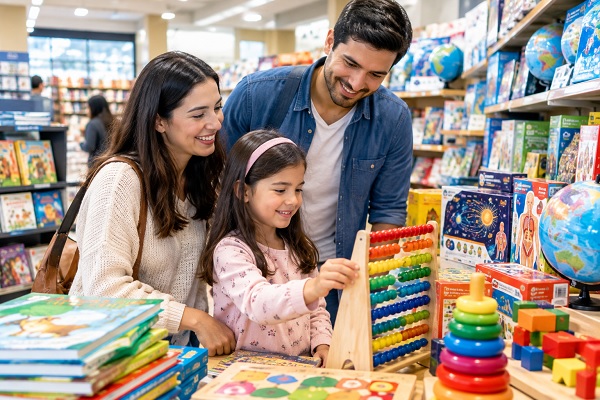
Kids' educational product shopping has become an important part of modern parenting and family shopping. Parents and caregivers can choose from puzzles, building sets, science kits, art supplies, educational games, books, activity kits, STEM products, learning boards, and digital learning tools.
The key is to choose products that match a child's age, interests, developmental stage, and learning needs rather than simply buying the most expensive or technologically advanced product.
What Is Kids' Educational Product Shopping?
Kids' educational product shopping refers to selecting and purchasing products designed to support children's learning and development.
These products can combine education with play, allowing children to explore concepts through hands-on activities and practical experiences. Depending on the product, children may learn mathematics, science, language, geography, creativity, logical reasoning, social skills, or basic technology concepts.
Why Educational Products Are Important
Educational products can make learning more engaging because children can interact directly with the activity.
1. Encourages Curiosity
Science kits, discovery sets, books, and experiment-based products can encourage children to ask questions and explore how things work.
2. Develops Problem-Solving Skills
Puzzles, strategy games, construction sets, and logic activities can help children practice finding solutions.
3. Supports Creativity
Art kits, craft materials, drawing products, musical instruments, and creative building sets provide opportunities for children to express their ideas.
4. Improves Fine Motor Skills
Activities involving drawing, assembling, sorting, stacking, cutting, or connecting pieces can help develop hand and finger coordination.
5. Makes Learning Enjoyable
When learning is presented as a game or hands-on activity, children may be more interested in participating.
Popular Categories of Educational Products
STEM Learning Products
STEM products introduce children to science, technology, engineering, and mathematics through practical activities.
Popular options include beginner coding kits, construction sets, science experiment kits, robotics kits, engineering challenges, and mathematical games.
Educational Board Games
Board games can teach counting, strategy, vocabulary, memory, decision-making, and teamwork.
Choose games with rules appropriate for the child's age and attention span.
Puzzles
Jigsaw puzzles, number puzzles, word puzzles, matching games, and logic puzzles can encourage concentration and problem-solving.
Building and Construction Sets
Building blocks and construction sets allow children to create structures while learning about shapes, balance, spatial relationships, and basic engineering concepts.
Books and Reading Products
Storybooks, picture books, activity books, encyclopedias, phonics books, and age-appropriate educational readers can support language development and general knowledge.
Art and Craft Products
Drawing kits, coloring sets, clay, painting supplies, origami materials, and craft activity boxes can encourage creativity and imagination.
Mathematics Learning Products
Counting sets, flash cards, mathematical board games, geometry kits, abacus products, and interactive math activities can make basic mathematical concepts easier to understand.
Language Learning Products
Alphabet boards, vocabulary cards, word games, reading activities, storytelling sets, and language-learning games can support children's communication and vocabulary.
Geography and General Knowledge Products
World maps, globe models, country cards, geography puzzles, and educational quiz games can introduce children to different countries, cultures, landmarks, and environments.
How to Choose Educational Products by Age
Preschool Children
For younger children, focus on simple products that develop recognition, coordination, language, colors, shapes, numbers, and basic problem-solving.
Suitable options may include:
Large-piece puzzles
Building blocks
Picture books
Shape sorters
Matching games
Coloring products
Simple counting activities
Early School Years
Children in the early school years can explore more structured educational products.
Consider:
Mathematics games
Reading activities
Science kits
Construction sets
Geography puzzles
Art kits
Word games
Older Children
Older children may enjoy products that involve deeper problem-solving and independent exploration.
Examples include:
Robotics kits
Coding products
Advanced science kits
Engineering sets
Strategy games
Research-oriented books
Creative technology products
Important Factors to Consider Before Buying
Age Appropriateness
Always check the recommended age range. A product that is too advanced may frustrate a younger child, while a product that is too simple may not hold an older child's interest.
Educational Value
Ask what the child can learn or practice through the product. Look beyond attractive packaging and identify the actual learning benefit.
Child's Interests
A child interested in animals may enjoy wildlife books or biology kits, while a child who enjoys construction may prefer building and engineering products.
Quality
Look for durable materials and products that can withstand repeated use.
Safety
Check for age recommendations, small parts, material information, sharp edges, and other potential hazards. Products intended for young children should be particularly carefully selected.
Reusability
Products that offer multiple activities or can be used repeatedly may provide better long-term value.
Physical Stores vs Online Shopping
Both physical and online shopping have advantages.
Physical stores allow parents to examine product quality, packaging, size, and materials before purchasing. They can also ask store staff questions about age suitability.
Online shopping provides a wider selection and makes it easier to compare prices, customer reviews, specifications, and educational features.
When shopping online, carefully check product descriptions, age recommendations, dimensions, included components, seller information, and return policies.
How to Avoid Unnecessary Purchases
Children's educational products can quickly accumulate at home. Instead of purchasing many products, consider whether a new item offers something different from what the child already owns.
For example, if a child already has several puzzles, a science kit or creative construction set may provide a more varied learning experience.
Parents can also rotate educational products. Keeping some activities away for a period and bringing them back later can make familiar products feel interesting again.
Educational Products and Screen-Free Learning
Screen-free educational products remain useful for encouraging hands-on learning.
Building blocks, puzzles, books, craft kits, board games, science experiments, and physical activity sets can provide children with opportunities to learn without relying on digital screens.
A balanced collection can include both traditional educational materials and carefully selected digital learning products.
Technology-Based Educational Products
Technology has introduced new categories of educational products, including coding toys, programmable robots, interactive learning devices, digital microscopes, electronic science kits, and educational applications.
Parents should consider whether technology genuinely improves the learning experience rather than choosing a product simply because it contains a screen or electronic component.
Sustainable Educational Shopping
Sustainability is becoming increasingly relevant to children's product shopping.
Parents can consider:
Durable products designed for long-term use
Recycled or recyclable materials
Wooden learning products
Reusable activity kits
Books that can be shared between siblings
Products with minimal unnecessary packaging
Educational products that can be passed on to other children
Buying fewer, better-quality products can also reduce household waste.
Budget-Friendly Educational Shopping
Educational products do not need to be expensive.
Affordable options include:
Used books in good condition
Simple puzzles
Drawing materials
Flash cards
DIY craft kits
Reusable activity books
Basic building blocks
Educational board games
Parents can also create learning activities at home using everyday materials such as cardboard, paper, containers, buttons, and recycled packaging.
Shopping for Educational Products as Gifts
Educational products can make useful birthday, holiday, and festival gifts.
For a younger child, consider puzzles, picture books, building blocks, or creative activity sets.
For older children, science kits, coding products, robotics sets, strategy games, art supplies, or specialized books may be more appropriate.
The best educational gift is usually one that matches the child's interests while introducing a useful new skill or concept.
Common Shopping Mistakes to Avoid
Buying Only for Entertainment
A colorful product may look attractive but may provide limited educational value. Check what children actually do with the product.
Ignoring Age Recommendations
Age recommendations are important for both learning suitability and safety.
Choosing Complexity Over Usefulness
More complicated does not always mean more educational. A simple product that a child uses regularly may be more valuable than an advanced product that remains unused.
Buying Too Many Products
Too many choices can make it difficult for children to focus. A smaller collection of varied and useful products can be more effective.
Ignoring Product Safety
Always review safety information, especially for products containing small pieces, magnets, batteries, chemicals, or electronic components.
Tips for Smart Kids' Educational Product Shopping
Create a shopping budget before purchasing.
Make a list of the skills or interests you want to support.
Compare several products before making a decision.
Read customer reviews carefully, especially reviews discussing durability and actual use.
Check whether replacement parts are available for products that contain multiple components.
Look for products that encourage children to create, experiment, solve problems, or think independently.
Most importantly, consider whether the child will actually enjoy using the product.
Future Trends in Kids' Educational Shopping
The children's educational product market is likely to continue combining traditional play with new technology.
Future shopping trends may include more personalized learning products, interactive STEM kits, beginner robotics, coding toys, sustainable materials, reusable activity systems, creative learning subscriptions, and products that adapt to different learning levels.
At the same time, traditional books, puzzles, building sets, art materials, and hands-on games will continue to play an important role because they provide simple and accessible ways for children to learn through play.
Conclusion
Kids' educational product shopping is about more than buying toys. It is an opportunity to choose products that encourage curiosity, creativity, problem-solving, communication, coordination, and independent learning.
Parents can make better purchasing decisions by considering age suitability, educational value, safety, quality, durability, interests, and budget. Whether it is a simple puzzle, a storybook, an art kit, a construction set, or a modern STEM product, the right educational item can turn everyday play into a meaningful learning experience.
The best approach is to create a balanced collection of products that children genuinely enjoy using while giving them opportunities to explore new skills and ideas.
Source :- Oh Women