
Follow us Now on Telegram ! Get daily 10 - 12 Interesting Updates. Join our Telegram Channel https://t.me/OhWomen
Download Telegram App before Joining the Channel
Smartwatch Shopping Guide for Fitness and Daily Life
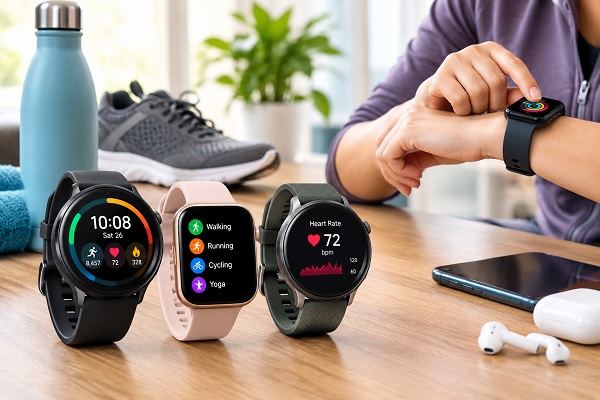
Smartwatches have become useful everyday devices for people who want to track fitness, stay connected and monitor daily activities from their wrist. Modern smartwatches can provide features such as activity tracking, heart-rate monitoring, sleep tracking, workout modes, notifications, GPS and smartphone integration.
With many models available at different prices, choosing the right smartwatch can be confusing. This shopping guide explains the important features to consider before buying a smartwatch for fitness and daily use.
What Is a Smartwatch?
A smartwatch is a wearable electronic device designed to provide information and selected smartphone functions directly from your wrist.
Depending on the model, a smartwatch may offer:
Fitness tracking
Step counting
Heart-rate monitoring
Sleep tracking
GPS
Workout tracking
Call and message notifications
Music controls
Alarms and timers
Weather information
Contactless payments on supported models
The available features vary by brand, model, operating system and region.
1. Decide Your Main Purpose
Before shopping, decide why you want a smartwatch.
If fitness is your priority, look for accurate activity tracking, workout modes, GPS and useful health-related sensors.
For everyday use, you may prioritize notifications, battery life, calling features and a comfortable design.
For outdoor activities, GPS, water resistance and durable construction can be particularly important.
2. Check Smartphone Compatibility
Compatibility is one of the first things to check.
Some smartwatches work with both Android and iPhone, while others are designed primarily for a particular smartphone ecosystem.
Before buying, check:
Supported smartphone operating systems
Required app
Minimum operating-system version
Bluetooth requirements
Availability of important features on your phone
A smartwatch may work with a phone but still have certain features limited outside its preferred ecosystem.
3. Consider the Display
The display affects everyday usability.
Important specifications include:
Screen size
Resolution
Brightness
Display type
Touch responsiveness
Always-on display availability
AMOLED displays are popular because they can provide strong contrast and vibrant visuals. A bright display can also make outdoor use easier.
4. Look at Fitness Tracking Features
If you are buying a smartwatch primarily for exercise, examine its fitness features carefully.
Useful functions can include:
Step counting
Distance tracking
Calories burned estimates
Heart-rate tracking
Workout modes
GPS
Running metrics
Cycling tracking
Swimming tracking
Activity reminders
Remember that wearable measurements are generally intended for wellness and fitness purposes and may not be as accurate as professional medical equipment.
5. Check GPS Features
Built-in GPS can be useful for outdoor running, walking, cycling and hiking.
A smartwatch with independent GPS can record routes without requiring the phone to provide location data, although the exact functionality varies by model.
Check whether the watch supports:
GPS
Multi-band or dual-frequency positioning
Route tracking
Distance tracking
Pace information
Navigation features
If you mainly exercise indoors, GPS may be less important.
6. Battery Life
Battery life can significantly affect the convenience of a smartwatch.
Some watches require charging every day or two, while fitness-focused models can operate for considerably longer depending on usage.
When comparing battery claims, consider whether the stated figure assumes:
Always-on display turned off
Limited GPS use
Fewer notifications
Specific power-saving settings
Heavy GPS, frequent workouts, calls and always-on displays can reduce battery life.
7. Health and Wellness Features
Many modern smartwatches offer wellness-related features such as:
Heart-rate monitoring
Blood oxygen measurements
Sleep tracking
Stress tracking
Breathing exercises
Menstrual-cycle tracking
Skin-temperature measurements on selected models
The availability and accuracy of these features vary between devices.
Some health features may be intended for general wellness rather than diagnosis or treatment. Check the manufacturer's information before relying on any health measurement.
8. Sleep Tracking
Sleep tracking can help users understand general sleep patterns.
Depending on the device, it may record:
Sleep duration
Sleep timing
Sleep stages
Night-time heart rate
Sleep consistency
For comfortable overnight use, consider the watch's weight, size, strap material and battery life.
9. Water Resistance
Water resistance is important if you exercise outdoors, swim or simply want to wear your smartwatch during daily activities.
Check the exact water-resistance rating rather than assuming that every smartwatch is suitable for swimming.
Also check manufacturer guidance regarding:
Swimming
Showering
Salt water
Hot water
Water sports
Water resistance can change over time due to wear and damage.
10. Check Smart Features
For daily use, smart features can make a smartwatch more convenient.
Depending on the model, you may get:
Call notifications
Message notifications
App notifications
Music controls
Alarm
Calendar
Weather
Find-my-phone functions
Voice assistant
Contactless payments
Choose features based on what you will actually use rather than buying a watch simply because it has a long list of functions.
11. Calling Features
Some smartwatches include microphones and speakers for Bluetooth calling.
Before buying, check whether the watch supports:
Bluetooth calling
Standalone cellular connectivity
Contact synchronization
Emergency calling
Voice assistant
Cellular models may require a compatible mobile plan and can usually cost more than Bluetooth-only versions.
12. Comfort and Size
A smartwatch can have excellent features but still be inconvenient if it is uncomfortable.
Consider:
Case diameter
Case thickness
Weight
Strap material
Strap adjustment
Wrist size
Button placement
If you plan to wear it during sleep, a lighter and slimmer model may be more comfortable.
13. Strap Options
Replaceable straps allow you to change the appearance and comfort of your smartwatch.
Popular materials include:
Silicone
Fluoroelastomer
Nylon
Leather
Metal
For workouts, breathable and sweat-resistant materials are generally practical. For formal occasions, metal or leather-style straps can create a different appearance where compatible.
14. Storage and Music
Some smartwatches offer internal storage for music and apps.
This can be useful if you want to exercise without carrying your phone, depending on the watch and supported services.
Check:
Available storage
Supported music apps
Offline playback
Bluetooth headphone compatibility
15. App and Ecosystem Support
The companion smartphone app is an important part of the smartwatch experience.
A good app can make it easier to view:
Fitness history
Workout records
Sleep data
Health trends
Device settings
Notifications
Watch faces
Before purchasing, check the app's compatibility and the features available in your country.
16. Smartwatch for Running
Runners should pay particular attention to GPS accuracy, heart-rate tracking, workout metrics and battery life.
Useful running features can include:
Pace
Distance
Running time
Heart-rate zones
Route mapping
Training plans
Recovery information
Advanced runners may also want more specialized performance metrics.
17. Smartwatch for Gym Workouts
For gym users, look for multiple workout modes and reliable activity tracking.
Useful features can include:
Strength-training modes
Cardio tracking
Interval timers
Heart-rate monitoring
Workout history
Recovery tracking
A comfortable strap is particularly useful during strength and cardio sessions.
18. Smartwatch for Daily Use
For everyday wear, consider a balanced combination of:
Comfortable design
Good battery life
Bright display
Notifications
Fitness tracking
Reliable smartphone connectivity
Durable construction
You may not need advanced sports features if your main activities are walking, commuting and general daily movement.
19. Price and Budget
Smartwatches are available across a wide range of prices.
Instead of choosing a model only because it is expensive, compare the features that matter to you.
A simple comparison can include:
Feature Basic Model Mid-Range Model Premium Model
Activity Tracking Usually Yes Yes
Heart-Rate Tracking Usually Yes Advanced options
GPS Selected models Common Common
Sleep Tracking Often Yes Advanced options
Calling Selected models Often Often
Premium Materials Limited Some More options
Battery Life Varies Varies Varies
Actual features differ significantly between models, so always check the manufacturer's specifications.
20. Check Warranty and After-Sales Support
Before purchasing, check:
Warranty period
Service-centre availability
Replacement strap availability
Battery replacement options
Software-update policy
Return policy
Repair support
Good after-sales support can be important because smartwatches contain batteries, sensors and other electronic components.
Smartwatch Shopping Checklist
Befoe buying, ask yourself:
Is it compatible with my smartphone?
How long does the battery last with my normal usage?
Does it have the fitness features I need?
Does it have built-in GPS if I need it?
Is it comfortable enough for daily wear?
Is it suitable for swimming or water exposure if required?
Does it support the apps I use?
Are replacement straps easily available?
Does it have a suitable warranty?
Is the price reasonable for the features I actually need?
Common Shopping Mistakes to Avoid
Avoid choosing a smartwatch based only on appearance or the number of advertised features.
Common mistakes include:
Ignoring smartphone compatibility
Overlooking battery requirements
Buying an uncomfortable size
Assuming all health measurements are medical-grade
Not checking water-resistance details
Ignoring software support
Paying for features you will never use
Forgetting to check warranty and service support
Final Thoughts
A smartwatch can be a useful companion for fitness and everyday life when its features match your needs. Before shopping, focus on compatibility, battery life, fitness tracking, GPS, comfort, display quality, water resistance and smart features.
For fitness-focused users, workout tracking and GPS may be the most important considerations. For everyday users, battery life, notifications, comfort and smartphone integration may matter more.
The best shopping decision is to compare several models based on your personal requirements, budget and the features you are actually likely to use
Source :- OhWomen