
Follow us Now on Telegram ! Get daily 10 - 12 Interesting Updates. Join our Telegram Channel https://t.me/OhWomen
Download Telegram App before Joining the Channel
Baby Skincare Shopping Guide for Sensitive Skin
Introduction
Baby skin is delicate and can be more sensitive to environmental conditions, fragrances, and certain skincare ingredients. Choosing suitable skincare products is therefore an important part of baby shopping. Parents and caregivers can look for simple, gentle products that support the skin barrier without unnecessarily exposing babies to multiple ingredients.
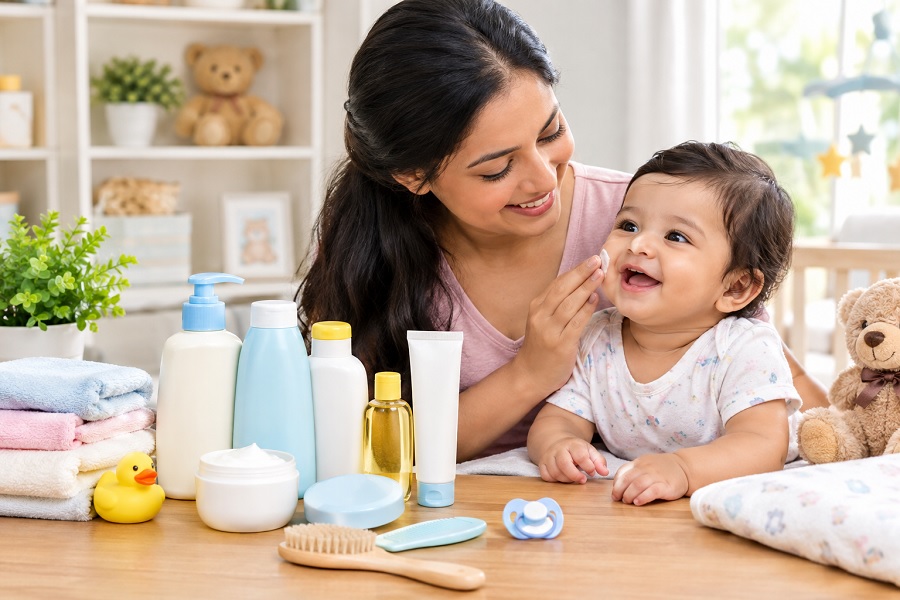
A good Baby Skincare Shopping Guide for Sensitive Skin should focus on essentials such as gentle cleansers, moisturizers, diaper-care products, and sun-protection strategies appropriate for the baby's age.
Why Baby Skin Needs Gentle Care
A baby's skin can lose moisture easily, and frequent bathing, dry weather, saliva, sweat, and contact with diapers can contribute to dryness or irritation. A simple skincare routine can help maintain healthy skin.
Parents do not necessarily need a large collection of skincare products. In many cases, a few carefully selected essentials are enough.
Baby Skincare Products to Consider
1. Gentle Baby Cleanser
Look for a mild cleanser designed specifically for babies. Products labelled fragrance-free can be useful for children with sensitive skin because fragrances may irritate some people's skin.
A cleanser should be gentle and should not leave the baby's skin feeling excessively dry after bathing.
2. Baby Moisturizer
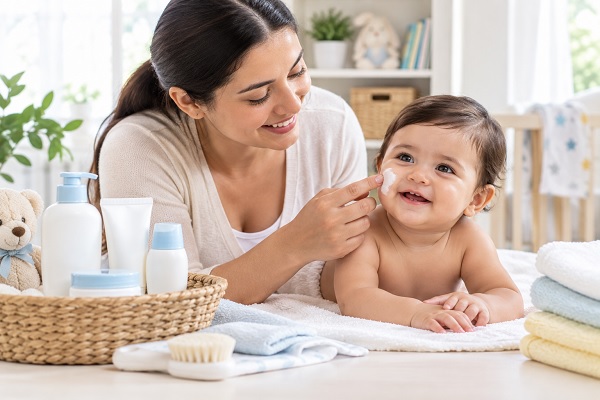
A gentle moisturizer can help maintain the skin's moisture barrier, particularly when the skin appears dry.
Look for products formulated for babies and avoid choosing products simply because they contain a long list of active ingredients. A basic moisturizer can often be sufficient for everyday care.
3. Diaper Rash Care
Diaper-area irritation is common because of prolonged contact with moisture and friction. When shopping for diaper-care products, parents can consider protective barrier creams or ointments designed for babies.
Frequent diaper changes and keeping the diaper area clean and dry are also important parts of diaper care.
4. Baby Shampoo
For babies who need shampoo, choose a mild product formulated for infants. A small amount is generally enough for routine washing.
Parents should avoid getting shampoo or cleanser into the baby's eyes.
5. Baby Laundry Products
Skincare does not only involve products applied directly to the body. Laundry detergents can also leave residues on clothing and bedding.
For babies with sensitive skin, parents may consider a fragrance-free detergent and avoid using heavily scented fabric products.
Ingredients to Consider When Shopping
When shopping for baby skincare products, read the ingredient label rather than relying only on words such as "natural" or "gentle."
Parents may prefer:
Fragrance-free formulations
Simple ingredient lists
Products specifically formulated for babies
Mild cleansing ingredients
Moisturizing ingredients
Products designed for sensitive skin
Clearly labelled products with appropriate usage instructions
It is also important to remember that natural does not automatically mean irritation-free. Some botanical ingredients and essential oils can cause irritation or allergic reactions.
Fragrance-Free vs. Unscented
These terms are not necessarily identical.
Fragrance-free generally means that fragrance ingredients have not been intentionally added.
Unscented can sometimes mean that a product has no noticeable smell, but ingredients may still be present to mask or neutralize other odors.
For babies with particularly sensitive skin, checking the ingredient list and choosing products specifically designed for sensitive skin can be more useful than relying only on marketing terminology.
How to Test a New Baby Product
When introducing a new skincare product, avoid applying several new products at the same time. Introducing products one at a time makes it easier to identify which product may be responsible if irritation develops.
For a baby with a history of skin problems or recurring reactions, parents should discuss appropriate product choices with a pediatrician or dermatologist.
Baby Skincare Shopping Checklist
Before purchasing baby skincare products, check:
Is the product specifically suitable for babies?
Is it appropriate for the baby's age?
Is it fragrance-free?
Does it have a simple formulation?
Is the packaging intact?
Is the expiry date clearly visible?
Are the storage instructions clear?
Does the product have appropriate safety information?
Does the product meet applicable local regulatory requirements?
Is the product necessary for the baby's routine?
Baby Bathing Tips
Bathing does not need to involve a large number of products. Use lukewarm water and keep bathing sessions reasonably short.
After bathing, gently pat the skin dry instead of rubbing it vigorously. If the baby's skin tends to become dry, applying a suitable moisturizer soon after bathing can help retain moisture.
Baby Skincare During Different Seasons
Summer
Hot and humid weather can increase sweating and discomfort. Lightweight clothing, appropriate bathing, and keeping skin folds clean and dry can help.
Winter
Cold and dry weather can contribute to dry skin. A gentle moisturizer may be useful, particularly after bathing.
Monsoon
Humidity and sweating can affect areas such as the neck, diaper area, and skin folds. Keeping these areas clean and dry is important.
Baby Sunscreen and Sun Protection
Sun protection is an important part of outdoor safety, but sunscreen recommendations depend on the baby's age. For young infants, direct sun exposure should be minimized through shade, protective clothing, and other physical barriers. Parents should follow guidance from their pediatrician and the sunscreen manufacturer's age recommendations.
For older babies and children, a suitable broad-spectrum sunscreen can be considered as part of a wider sun-protection routine.
Common Baby Skincare Shopping Mistakes
Buying too many products: Babies generally do not need an extensive skincare collection.
Choosing products mainly because they smell good: A pleasant fragrance does not make a product better for sensitive skin.
Changing products frequently: Constantly switching products can make it difficult to identify the cause of irritation.
Ignoring labels: Product claims such as "natural" or "herbal" should not replace checking the actual ingredients.
Using adult skincare products: Adult products may contain ingredients or concentrations that are not appropriate for babies.
When to Seek Medical Advice
If a baby develops persistent redness, swelling, severe dryness, oozing, crusting, blisters, or a rash that does not improve, parents should seek medical advice.
A healthcare professional can determine whether the problem is simple irritation, an allergic reaction, eczema, infection, or another condition and recommend appropriate treatment.
Budget-Friendly Baby Skincare Shopping
Parents do not need to spend a large amount of money to create a basic baby skincare routine. Prioritize essential products such as:
Gentle cleanser
Suitable moisturizer
Diaper-care product
Age-appropriate sun-protection products when needed
Gentle laundry detergent if required
Buying larger packages can sometimes reduce the cost per use, but only when the product is appropriate and likely to be used before its expiry date.
Conclusion
Shopping for baby skincare products requires more attention to gentleness, ingredients, age suitability, and necessity than to the number of products in the baby's collection. A simple routine with carefully selected products can be easier to maintain and may reduce unnecessary exposure to potential irritants.
For babies with particularly sensitive or repeatedly irritated skin, professional medical advice is more appropriate than experimenting with multiple new products. A thoughtful shopping approach can help parents create a comfortable and practical everyday skincare routine.
Source :- OhWomen