
Follow us Now on Telegram ! Get daily 10 - 12 Interesting Updates. Join our Telegram Channel https://t.me/OhWomen
Download Telegram App before Joining the Channel
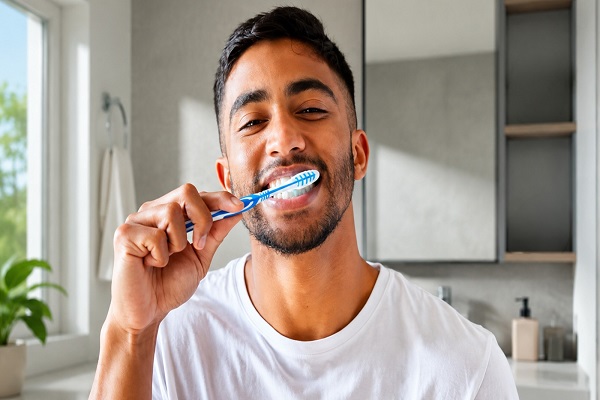
Everyone appreciates a bright, white smile. Clean teeth enhance facial beauty and boost self-confidence. This is why social media is currently full of home remedies for quick teeth whitening. Some suggest using baking soda, while others recommend lemon, turmeric, or vinegar. Some videos even claim that yellowing can be eliminated in just a few minutes.
However, changing the color of teeth is not that simple. While certain home remedies might temporarily reduce surface stains, they do not whiten the teeth from within. Therefore, before attempting to whiten your teeth, it is important to understand why discoloration occurs and how different home remedies affect them.
Dietary habits are often the most common cause of yellowing teeth. Pigments found in tea, coffee, tobacco, and carbonated drinks adhere to the tooth enamel. Without proper oral hygiene, these pigments can turn into permanent yellow or brown stains.
Tooth discoloration associated with aging is also common. Teeth have a tough outer layer called enamel, which naturally thins over time. Beneath it lies a layer called dentin, which is naturally pale yellow. As the enamel thins, the dentin becomes more visible, making the teeth appear yellow. In such cases, simply cleaning surface stains will not result in fully white teeth.
Regarding baking soda, it is a common ingredient in many whitening toothpastes. It helps gently remove certain surface stains but does not alter the tooth's natural color. Many people make the mistake of scrubbing their teeth repeatedly and vigorously with baking soda; excessive scrubbing can wear down the outer layer of the teeth. This increases tooth sensitivity—specifically, the sensation of pain when consuming hot or cold foods. Therefore, it is incorrect to view baking soda as a miraculous home remedy for teeth whitening.
Similarly, lemon and vinegar can be harmful to teeth. Both are acidic; the acid they contain gradually weakens the outer layer of the teeth. Repeated application or rubbing of these substances on the teeth can damage the enamel. Once enamel is damaged, it cannot regenerate. Its weakening can lead to tooth sensitivity and make the underlying yellow layer more visible. Consequently, in the attempt to whiten teeth, the yellowing may actually become more apparent.
There are several scientifically proven methods for whitening teeth. Many whitening products utilize a substance called peroxide, which targets the particles responsible for the yellow appearance of teeth by breaking them down into smaller fragments.
Commercially available whitening strips and gels—when properly formulated—can yield gradual results. However, professional whitening performed under the supervision of a dentist is generally safer and more effective.
Source :- IANS