
Follow us Now on Telegram ! Get daily 10 - 12 Interesting Updates. Join our Telegram Channel https://t.me/OhWomen
Download Telegram App before Joining the Channel
Yogic scriptures prescribe the practice of various *mudras* (gestures or seals) to maintain the health of the body and mind. Among these practices is the 'Mahavedha Mudra,' which connects the practitioner to a profound and subtle dimension of yoga where the body, *prana* (life force), and mind converge at a single point.
Mahavedha Mudra is a significant and advanced yogic practice within Hatha Yoga; here, 'Maha' signifies 'great,' and 'Vedha' implies 'piercing' or 'striking.' This mudra aids in awakening the body's major *chakras* (energy centers) and *nadis* (energy channels). Regular practice helps maintain an energy balance within the body and enhances concentration. It is considered particularly beneficial for those dedicated to the practice of yoga and meditation.
This mudra integrates the three primary *bandhas* (energy locks)—Mula Bandha, Uddiyana Bandha, and Jalandhara Bandha—and is believed to facilitate the awakening of *Kundalini* energy and the piercing of the *Sushumna Nadi*. Ancient texts such as the *Hatha Yoga Pradipika* and *Gheranda Samhita* describe this mudra as a means to attain *Siddhi* (spiritual accomplishment) and guide the practitioner toward *Mahasiddhi* (supreme spiritual attainment).
It not only enhances mental peace and vital energy but also infuses the practitioner's personality with a transcendent aura. It activates the *Muladhara Chakra* (Root Chakra), thereby aiding in the awakening of *Kundalini* energy. Regular practice helps alleviate ailments such as constipation, hemorrhoids, and other internal disorders. It also influences the pineal and pituitary glands, promoting hormonal balance.
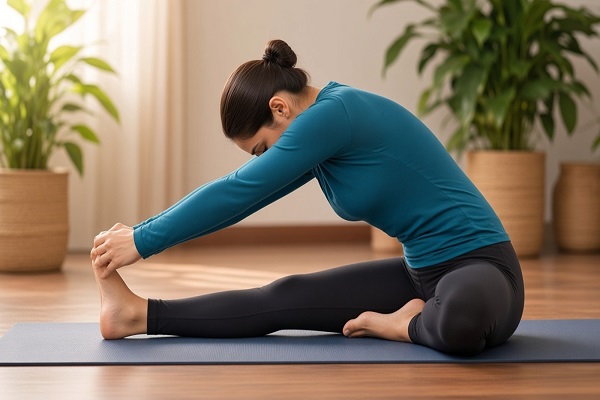
To perform this *asana*, sit comfortably in *Padmasana* (Lotus Pose) and keep the spine erect. Place your palms on the ground beside your thighs. Inhale deeply through the nostrils, retain the breath (*Antar Kumbhaka*), and engage *Jalandhara Bandha*. Support your body weight on your hands to lift your torso slightly, and gently touch your buttocks to the ground 3 to 5 times. Rest your buttocks on the floor, then slowly release the *bandha* (lock) and exhale.
Individuals suffering from neck pain, cervical spondylitis, or vertigo should not perform this practice. Those with high blood pressure or heart disease should avoid doing it.
Source :- IANS